
Since 1925, the Indian labour movement has gone through many struggles. In pre- and post-Independence India, it had succeeded in forcing the government to frame labour-friendly laws. But the Narendra Modi government has tried to erase a century’s progress of hard-won rights with four new Labour Codes.
What exactly are the four new Labour codes? The first, the Code on Wages, 2019, is a combination of the Payment of Wages Act, 1936; the Minimum Wages Act, 1948; the Payment of Bonus Act, 1965; and the Equal Remuneration Act, 1976.
The second, the Industrial Relations Code, 2020, consolidates the Trade Unions Act, 1926; the Industrial Employment Act, 1946; and the Industrial Disputes Act, 1947.
The third, the Occupational Safety and Health Working Conditions Code, 2020, subsumes some of the provisions of the Factories Act, 1948; the Plantations Labour Act, 1951; the Mines Act, 1952; the Motor Transport Workers Act, 1961; and the Beedi and Cigar Workers Act, 1966. Also in the same code, the Contract Labour Act, 1970; the Sales Promotion Employees Act, 1976; the Inter-State Migrant Workmen Act, 1979; the Cine-workers and Cinema Theatre Workers Act, 1981; the Dock Workers Act, 1986; and the Building and Other Construction Workers Act, 1996 have been incorporated.
Also Read | Code red for workers
The fourth, the Code on Social Security, 2020, has incorporated provisions of the Employees’ Provident Funds Act, 1952; the Employees’ State Insurance Act, 1948; the Employment Exchanges Act, 1959; the Maternity Benefit Act, 1961; the Payment of Gratuity Act, 1972; the Cine Workers Welfare Fund Act, 1981; the Building Workers Act, 1996; and the Unorganised Workers Social Security Act, 2008.
Workers’ demands
Since 1925 onwards, workers have won various rights but there have been limitations as well. Hence, the trade unions had demanded an increase in the bonus, which had been capped at 8.33 per cent of annual wages/salary since 1965 to 12 per cent under the new Labour Codes. The trade unions made several other demands for the benefit of workers: previously, in the case of a factory shutdown or lay-offs, the compensation was to be paid at the rate of 15 days per year. The labour unions demanded that compensation be paid for at least 30 days per year.
Similarly, another demand was to increase the calculation of gratuity payment for employees who have completed 5 years, from the rate of 15 days’ wages per annum to 30 days’ wages per annum. Also, they demanded that approval for trade unions be decided by secret ballot.
The trade unions also demanded that even if only a single worker is employed in a unit, the establishment should come under the purview of labour laws; currently labour laws come into effect only if an establishment employs at least 40 people.
Further, they sought labourer status for domestic workers, as defined by the ILO. The trade unions also asked that, in a struggle between workers and employers, the government stand for the welfare of the workers. They further said that the government should take a stand and intervene to bring justice to the workers.
In addition, the trade unions insisted that contract workers be appointed as permanent workers, making the implementation of labour laws compulsory in every establishment. Contractualisation in government sector should be abolished, they said. But the new Labour Codes have not considered any of these demands. The Modi government has squeezed a total of 44 labour laws into 4 codes and has ignored all the progressive demands made by the trade unions.
No stakeholder consultations
In all these years, the government, the representatives of the owners, and the representatives of the trade unions used to sit together and come up with a draft of new laws. But since 2015, this tripartite system has been abandoned by the Modi government. Not a single meeting has taken place since 2015 regarding any labour laws, including the new Labour Codes as well.
What is more, the new governing principles on labour are called “codes” but they are incomplete and cannot be taken into consideration without referring to the old laws.
Labour organisations were painstakingly built over several decades after workers first united because they could no longer put up with the injustice they faced. That is why there was a provision from 1926 that even as few as seven labourers could join hands and form a union. The Centre has undermined this fundamental right of the worker with the new codes that say that without at least 10 per cent of the total worker strength or 100 workers, whichever is less, in a department of an organisation, labour unions cannot be formed.
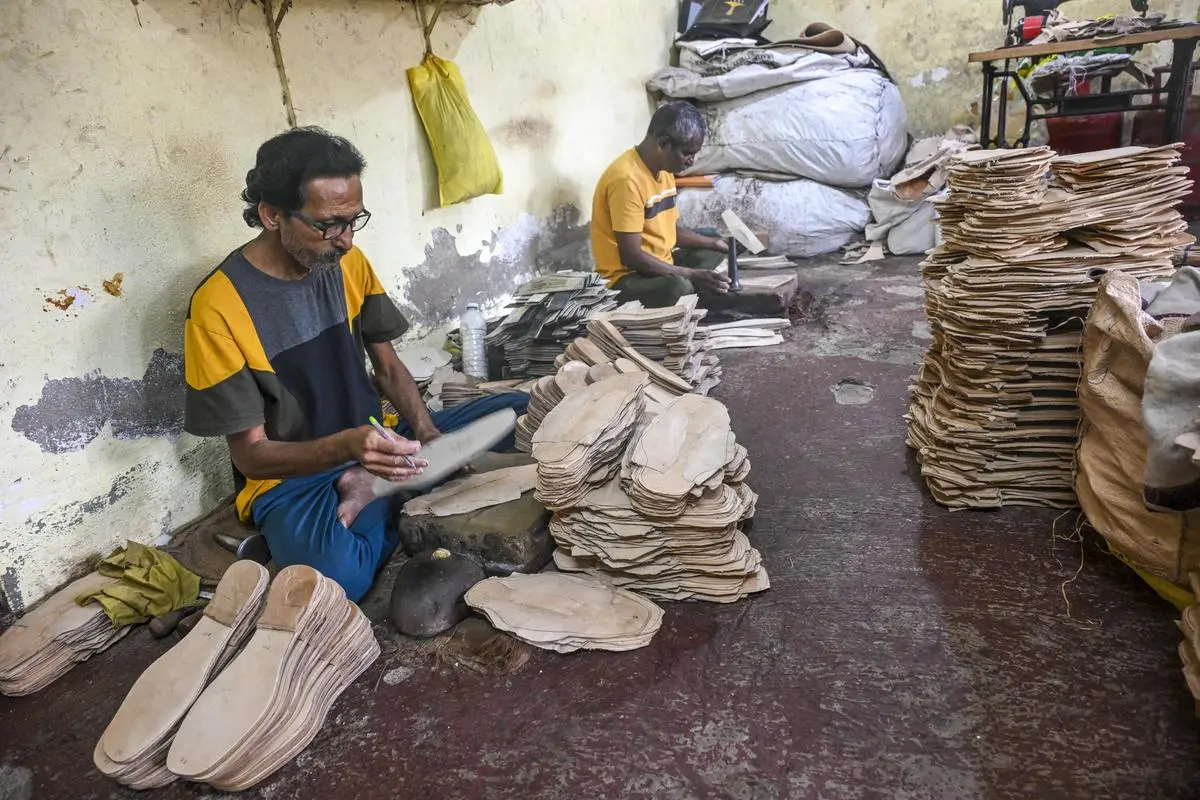
Artisans making Kolhapuri chappals at a workshop in Kolhapur, Maharashtra.
| Photo Credit:
EMMANUAL YOGINI
This goes against the fundamental right of “organisation” as defined by the Constitution of India. It will essentially mean that no new labour unions will be allowed to be formed, and the workers will be left to fend for themselves.
Favouring industrialists, not workers
The name Industrial Relations Code also suggests that it was not drafted for the welfare of labourers but to keep industrialists in good humour. The labour laws that were in force for 100 years from 1925 to 2025 laid bare the reality of the strains between the owner and the labourer, but by making it an “Industrial Relations Code”, the BJP-led National Democratic Alliance government is trying to sabotage the interests of labourers.
The biggest change brought about by the Modi government in the policy on labour laws is on decision-making. Now, the bureaucracy will make decisions on the micro details of the labour laws, not elected representatives. This is a direct attack on parliamentary democracy. Bureaucrats will invariably try to show loyalty to the government of the day. Elected representatives could have made changes in the laws, suggested amendments, and opposed or supported them on the floor of legislative houses. But henceforth, as the laws will be made in the cabins of the bureaucrats, the basic idea of debate and discussion will vanish.
In keeping with the recent trend of bulldozing key legislation through Parliament, the new Labour Codes were passed in just 20 minutes in the Lok Sabha.
Provisions to thwart strikes
Another issue with the new Labour Codes is that they destroy the labourers’ weapon of strike. Generally, a strike is seen as the last resort. When workers’ demands were ignored time and time again, they had the option of going on strike—unless they were employed in essential services. The Essential Services Maintenance Act, 1968, applied to public services such as transport, healthcare, police, and fire services. But with the new Labour Codes in place, the Modi government has ensured that no labourer can go on strike. Now, notice is to be given 14 days before a strike. And if the labour department holds a hearing on the workers’ demands within those 14 days, then no strike can be held. Similarly, if a court hearing is pending on the demands, again no strike is allowed. These are nothing but means to prevent strikes. If the unions still go ahead and give a call for a strike, according to the new codes, criminal cases can be filed against the people involved. This would leave labourers helpless and without recourse. Now, they face the prospect of being drowned in court cases that go on for years and years.
The new codes have also set several restrictions. Now, the term “strike” has been redefined as a situation in which more than 50 per cent of labourers go on leave. Workers are now prohibited from taking part in nationwide general strikes. Participating in others’ strikes as a sign of a token protest is also not permitted any more. All other means of strike have also been abolished with these laws. This will give owners a complete upper hand, as a result of which the rights and privileges of labourers will be ignored.
Job security and safeguards eroded
Not only have the new Labour Codes essentially done away with the right to strike, they have also struck at job security. Earlier, if an industry was set up with 100 or more workers, then the labourers were protected if there were lay-offs or if the establishment was shut down. All the labourers would get compensation and benefits. According to the new Labour Codes, this applies only to companies with 300 or more labourers. As this clearly goes against worker interests, trade unions have demanded that the policy revert to the earlier threshold of 100 workers. But the Modi government has ignored the demand. The reason cited is that it would increase employment in companies. But that is unlikely.
With the end of the permit raj, it was said that the safety and security of workers would be taken care of by owners. But if one looks at the data of the past five years, more instances such as boiler blasts have taken place where the affected labourers have not received compensation. Now, the Modi government has made things easier for owners. With the new Labour Codes, if it is a first-time offence, the owner can get away by paying just 50 per cent of the fine. This is going to serve as a loophole for owners to evade responsibility over all kinds of issues related to worker safety and security. So, owners who have good relations with local labour officers would escape from every offence by portraying it as a first.
Not only has the Modi government undermined worker safety and security provisions with the new Labour Codes, the administration is also making a lot of noise about “Equal Work, Equal Pay”. But this cry for pay parity is restricted to gender-based equality when it comes to the nature and job profile of employees. What about pay parity between contract workers and permanent workers? If the contract worker is doing the same work as a permanent worker, then equal wage should be given to both of them. But the new laws do not utter a word about it. In the case of contract workers, the new Labour Codes have created an escape route for owners. The government has introduced a new term: “Fixed-Term Contract”. Now, owners will have the final say about the longevity of the term of a worker’s employment. It could be 1 month, 1 day, or 11 months.
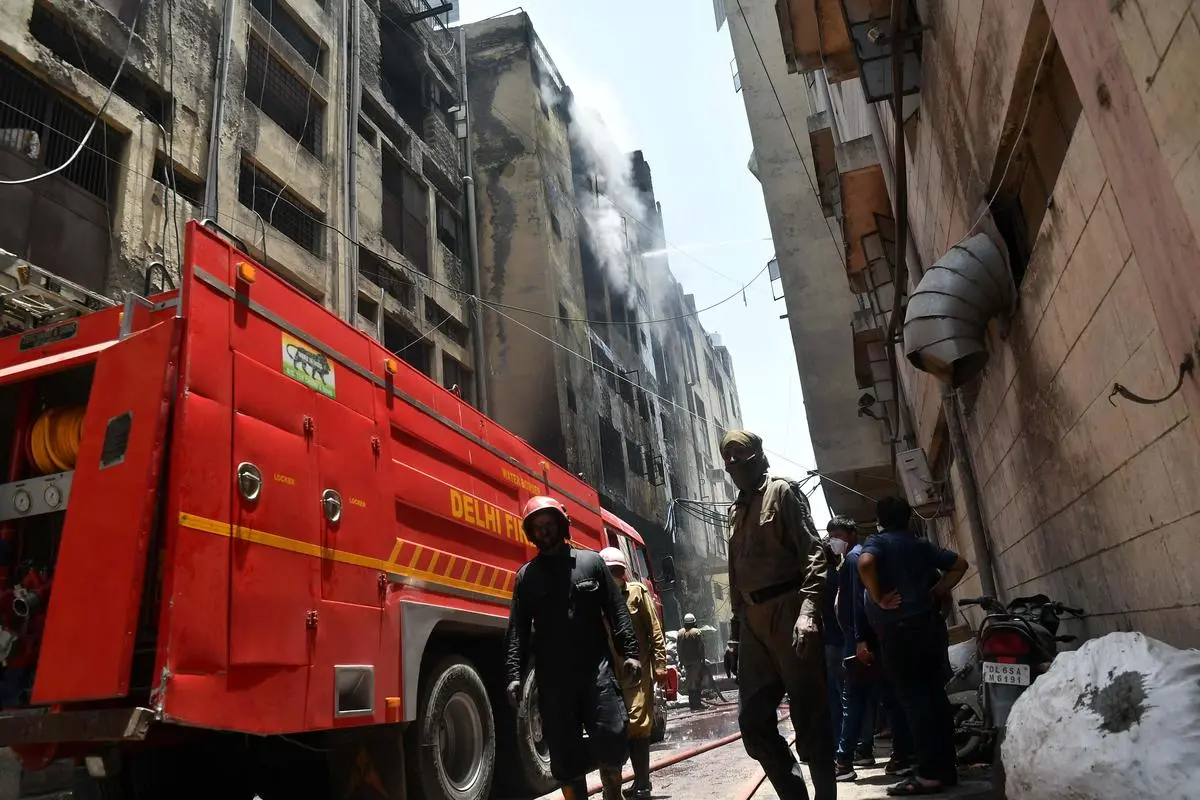
At the scene of a major fire that broke out in a shoe factory in Delhi’s Keshav Puram on May 26, 2020. The new Labour Codes provide loopholes for owners to evade responsibility for worker safety and security.
| Photo Credit:
SHIV KUMAR PUSHPAKAR
The Modi government is also publicising the new gratuity rules. But the term gratuity is basically a guarantee of funds to see a labourer through old age. Now, if labourers get gratuity every 11th month, it will finish off the financial guarantee before they reach old age. This is being hailed as an ease of business measure, but actually it enables the easy exploitation of labourers.
The new Labour Codes are being hailed as a revolutionary step in the welfare of labourers, but in reality they set the clock back. In these times when the owners are getting facilities such as “Single Window System” to set up an industry, labourers are forced to run from pillar to post for their provident fund, gratuity, balance payment, the right of bonus, and so on. The Modi government’s laws have made the going tough for labourers.
Time to act
Trade unions should not sit idle and watch what is happening. Their history of struggle is long and glorious. Back in the 1920s, the All India Trade Union Congress was established with the view that all the workers of India should unite and fight for their rights. Then, the owners of mills were largely backed by the British government. Today, the owners are backed by the Modi government and vice versa. In such conditions, trade unions should join hands to push this government to withdraw the new Labour Codes.
Also Read | July 9 strike unites 25 crore workers against labour codes and low wages
Just as the country’s farmers came together and stood their ground on Delhi’s borders, forcing the Modi government to withdraw three controversial farm laws, and as the owners, drivers, and cleaners of goods trucks united to compel the government to roll back new conditions imposed on them, now is the time for the country’s labourers to unite.
Back in the 1900s when Lokmanya Tilak was sent into exile by the British government, the labourers of Mumbai (then Bombay) held such a strong protest that they shut the city down for eight days. Labourers and workers have always overcome the various diversions and divisionary forces of sectarian politics such as caste and religion to struggle and stand united for their rights. The time has come once again for a peaceful protest against the Modi government’s crony capitalist policies.
Deepak Bhalerao has been a trade unionist for five decades and has represented workers in various industrial and labour courts, the most significant being the case won by BMC workers at the Industrial Tribunal, whose judgment was upheld by the Supreme Court.








Leave a Reply